

MATHEMATICS - ANGLES
Vertical Angles Worksheet
- Focuses on identifying and naming different types of angles formed by intersecting lines
- Covers the properties and relationships of angles when a transversal crosses parallel lines
- Includes questions on vertical, corresponding, and alternate interior angles
- Designed for Grade 6 students to practice basic geometrical reasoning
Here are the first 3 questions. Click “View all questions” to see the complete assessment.
Q1.
Q2.
Which statement describes two adjacent angles on a straight line?
Q3.
A transversal crosses two parallel lines. One angle is in the upper-right position at the first intersection, and another is in the upper-right position at the second intersection. What are these angles called?
Q4.
Where are alternate interior angles located when a transversal crosses two parallel lines?
Q5.
When a transversal crosses two parallel lines, which statement about corresponding angles is true?
Q6.
Straight lines AB and CD intersect at O. Which pair is vertically opposite?
Q7.
What is a line called when it crosses two or more other lines at different points?
Q8.
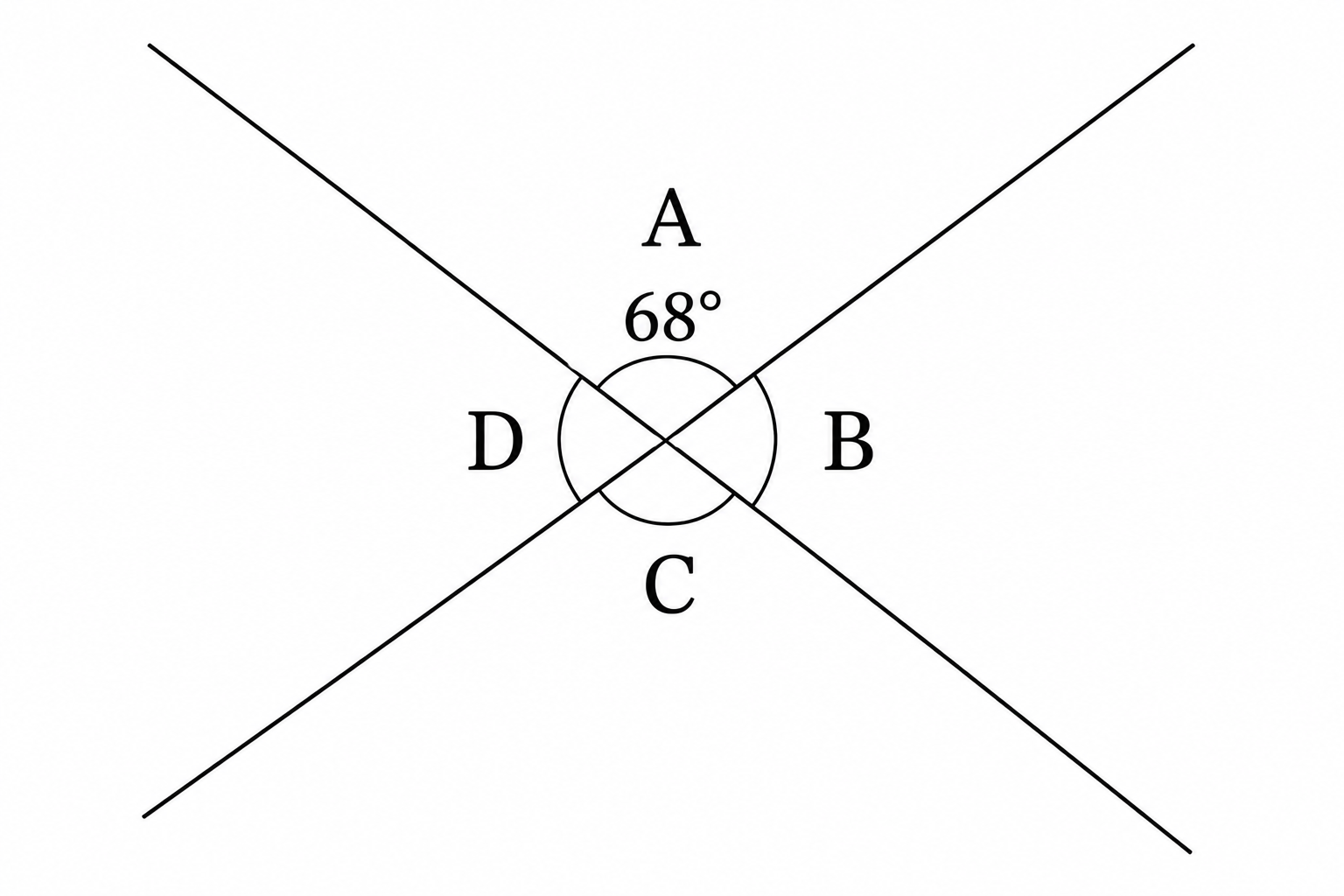
In the figure, what is the measure of ∠ C?
Q9.
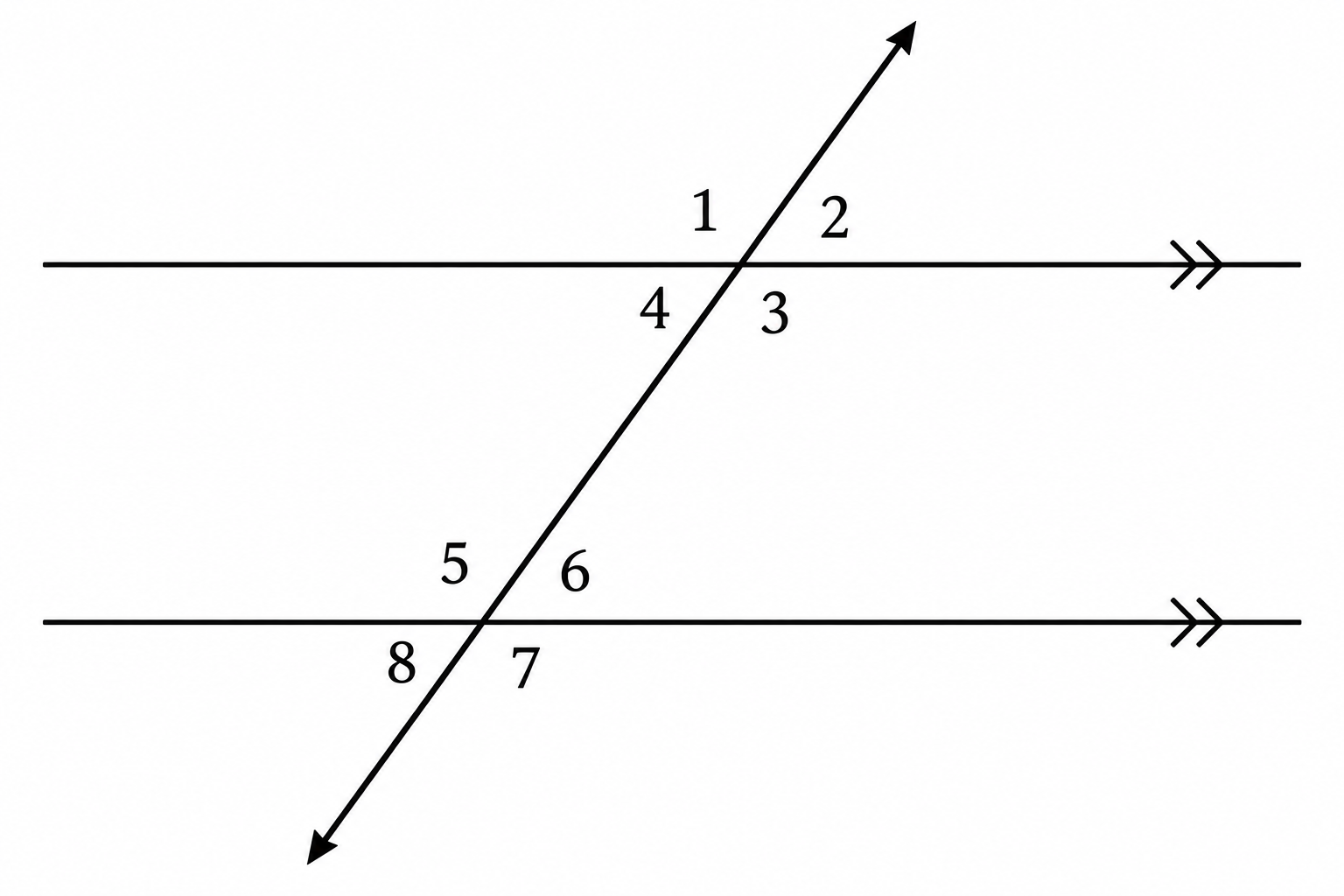
Which labelled angle corresponds to ∠ 2?
Q10.
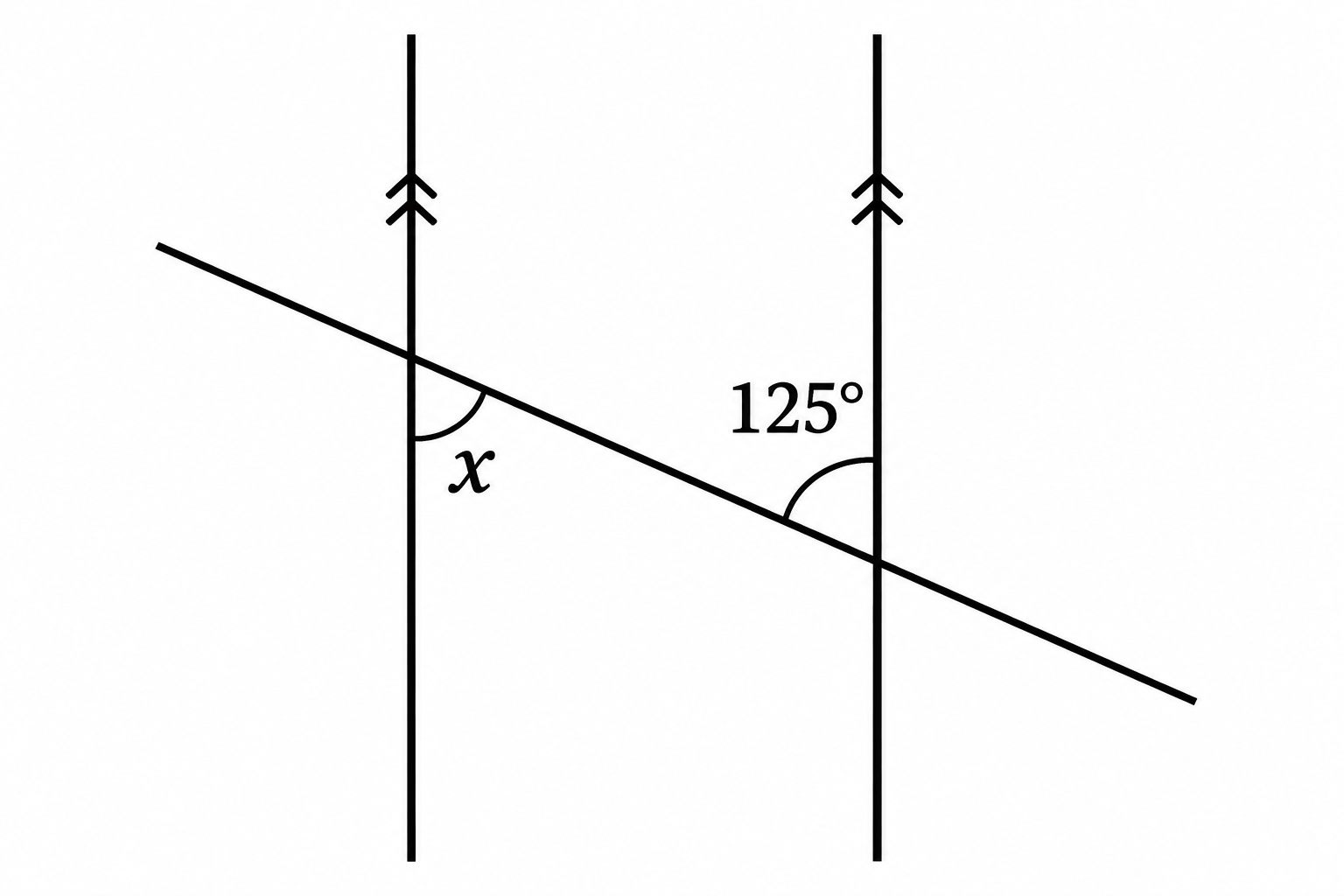
What is the relationship between the angle marked x and the angle marked 125^(\)circ?
What this assessment covers
Concepts tested
- Vertical angles and their properties
- Adjacent angles on a straight line
- Corresponding angles in parallel lines
- Alternate interior angles with a transversal
- Transversals and their role in angle formation
Question Mix
- Easy questions included
Skills you build
- Identify types of angles formed by intersecting lines
- Recognize angle relationships in parallel lines
- Apply geometric reasoning to solve angle problems
- Understand the role of a transversal in geometry
- Analyze diagrams to determine angle measures
Related assessments
More practice
Other assessments in this subject
