

CHEMISTRY - HISTORY OF CHEMISTRY
chemistry mids
- Explores the principle of conservation of mass in chemical reactions
- Analyzes the reliability and accuracy of scientific measurements
- Highlights the importance of peer review and replication in scientific research
- Emphasizes the collaborative nature of scientific investigations
Here are the first 3 questions. Click “View all questions” to see the complete assessment.
Q1.
Q2.
Three groups measure the boiling point of the same pure liquid. Group A obtains 79.9 °C, 80.0 °C and 80.1 °C; Group B obtains 76 °C, 80 °C and 84 °C; Group C takes only one reading of 80.0 °C. Which analysis best explains the confidence scientists should place in these outcomes?
Q3.
A researcher reports that a new catalyst speeds up a reaction. Before accepting the claim, other chemists examine the method and repeat the experiment. What does this example show about science?
Q4.
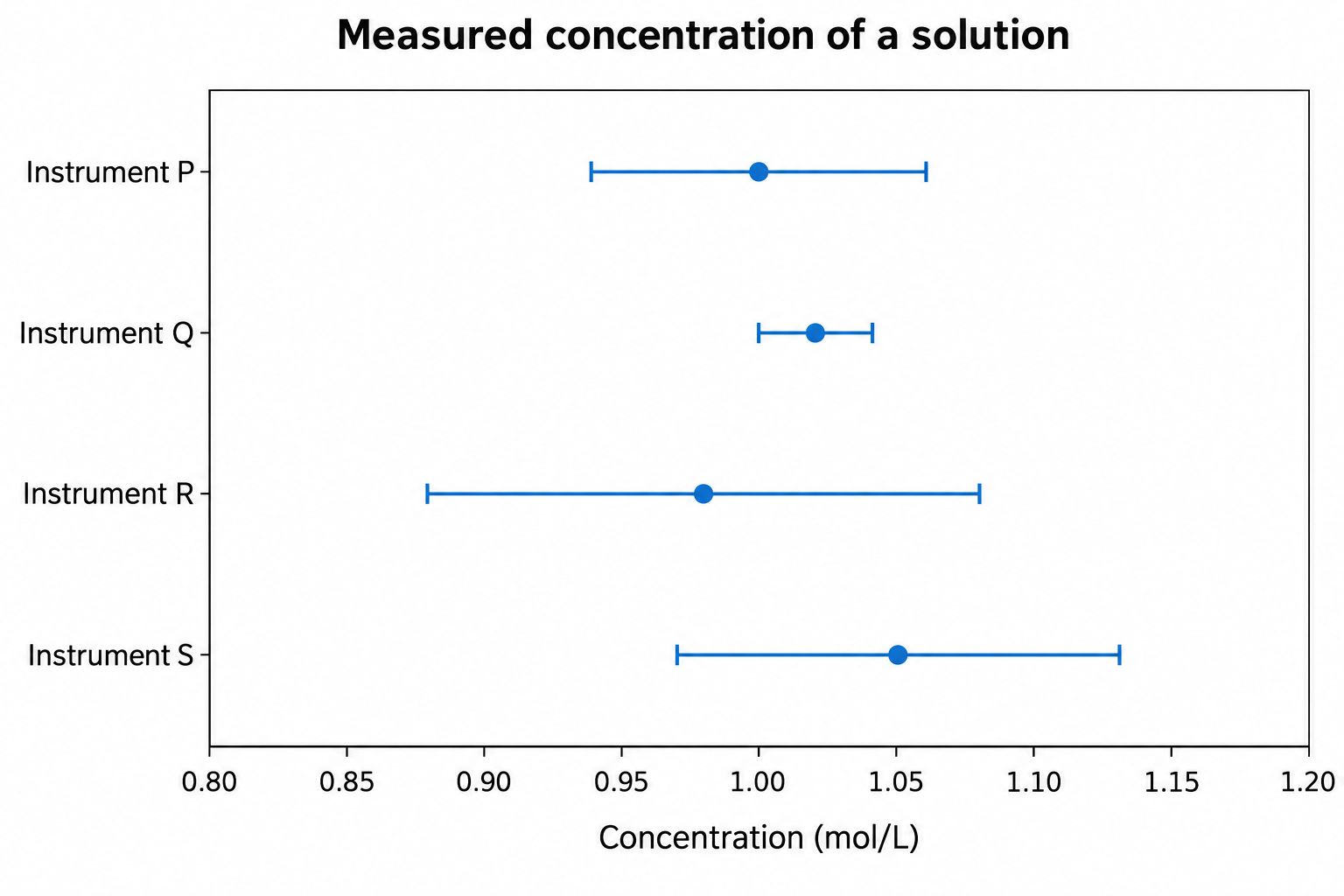
The image compares repeated concentration measurements made with four instruments. Which instrument's result should be reported with the greatest confidence based on the displayed uncertainty?
Q5.
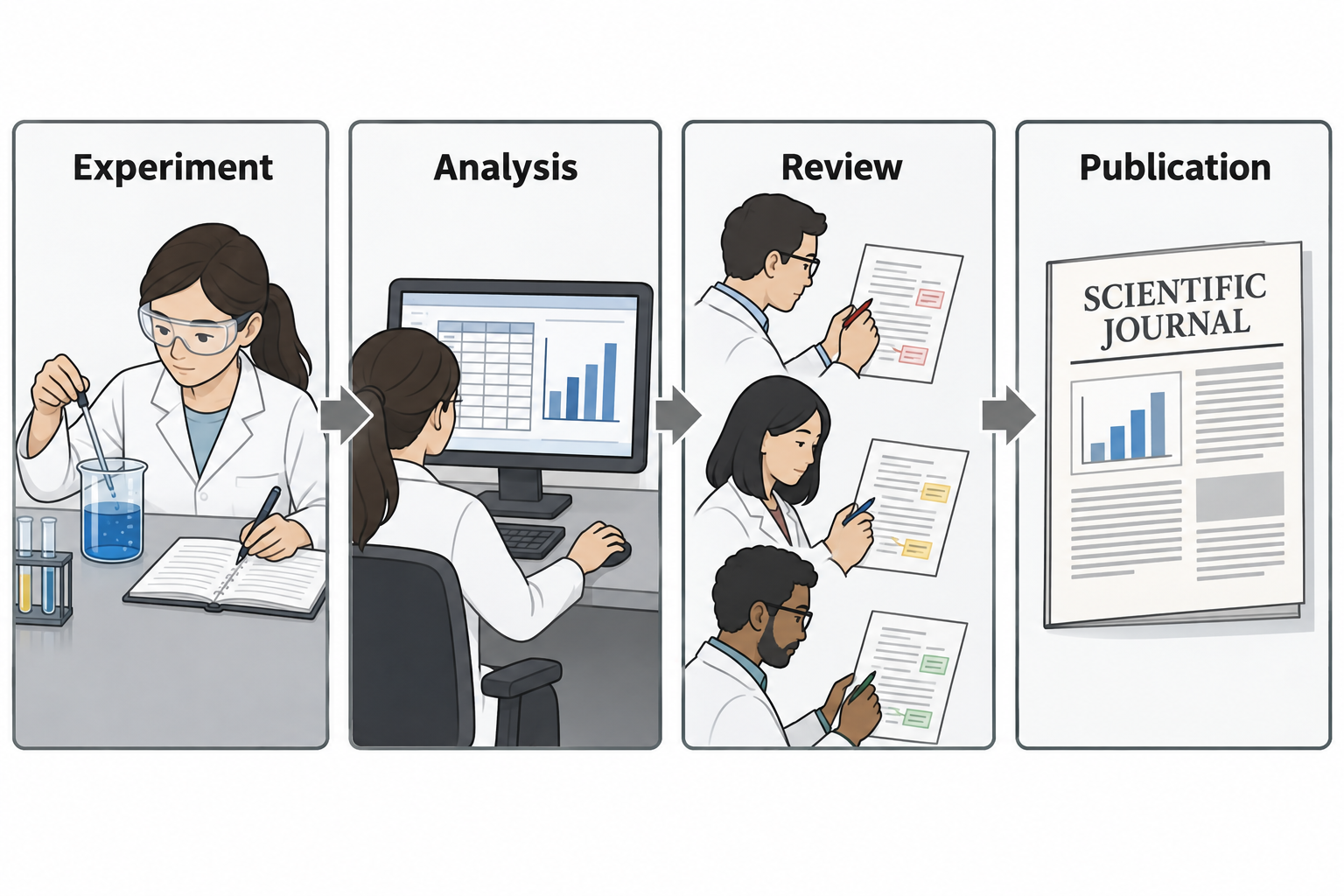
In the image, which feature most clearly demonstrates that scientific investigation is a community process rather than the work of one person alone?
What this assessment covers
Concepts tested
- Conservation of mass in chemical reactions
- Reliability and accuracy in scientific measurements
- Role of peer review in scientific validation
- Importance of replication in experiments
- Community aspect of scientific research
Question Mix
- Easy questions included
Skills you build
- Apply the concept of mass conservation to chemical reactions
- Evaluate the reliability of experimental data
- Interpret the significance of peer review in science
- Assess the importance of repeated trials in experiments
- Understand the collaborative nature of scientific work
Related assessments
More practice
Other assessments in this subject
