

BUSINESS - FINANCIAL STATEMENTS
Income Statement Practice Questions
- Covers key components of an income statement, including revenue, cost of sales, and gross profit.
- Explores the impact of changes in expenses on the overall financial outcome.
- Includes practical calculations for determining retained profit and revenue.
- Focuses on common errors in income statements and their effects.
Here are the first 3 questions. Click “View all questions” to see the complete assessment.
Q1.
Q2.
Which description of revenue in an income statement is correct?
Q3.
A business has cost of sales of £46,000 and gross profit of £29,000. What is its revenue?
Q4.
Which sequence correctly shows how the main figures in an income statement are used?
Q5.
A retailer's office rent increases, while its revenue and cost of sales remain unchanged. How will this affect its income statement?
Q6.
A company earns a profit of £36,000. It pays £7,000 in tax and distributes £11,000 as dividends. What is its retained profit?
Q7.
Business A has revenue of £100,000, cost of sales of £60,000 and expenses of £25,000. Business B has revenue of £90,000, cost of sales of £45,000 and expenses of £35,000. Which comparison is correct?
Q8.
An income statement accidentally leaves out £8,000 of cost of sales. All other figures are correct. What effect will this error have?
Q9.
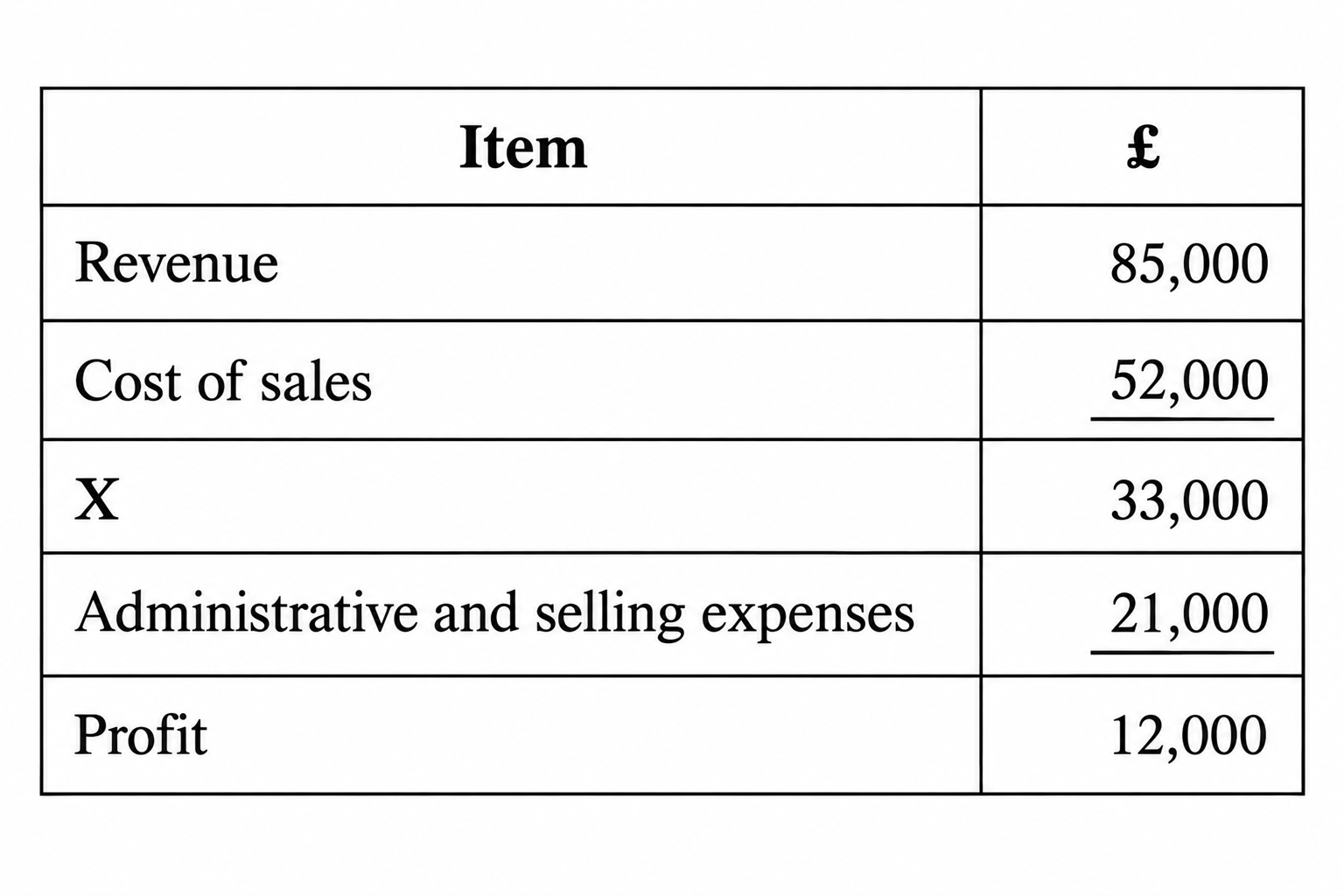
Study the income statement extract in the figure. What heading should replace X?
Q10.
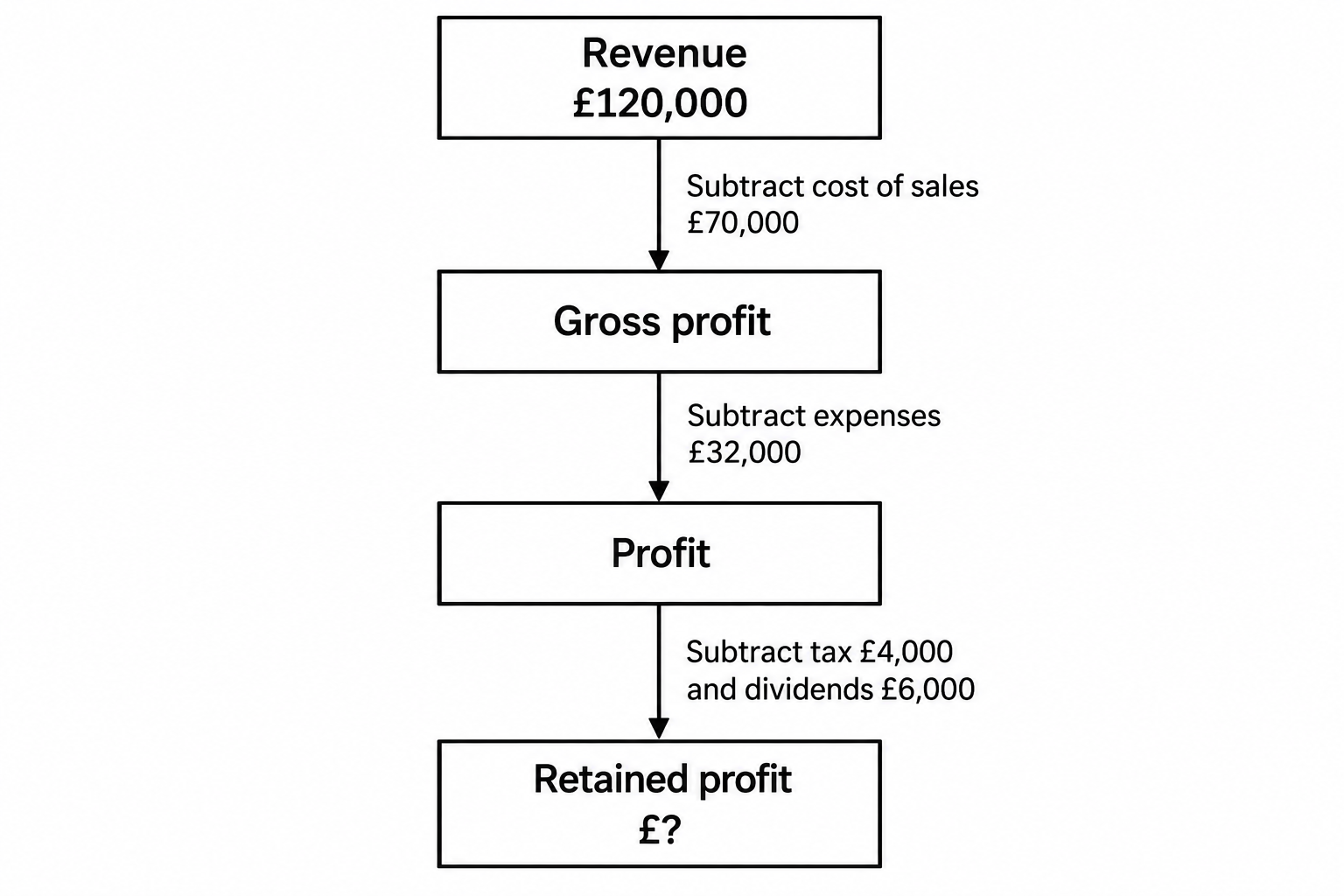
Use the income statement flow diagram to calculate the amount that belongs in the final blank box.
What this assessment covers
Concepts tested
- Understanding of revenue and cost of sales in income statements
- Calculation of gross profit and its components
- Impact of expenses on net profit
- Retained profit calculation after tax and dividends
- Identification of errors in financial statements
Question Mix
- Medium questions included
Skills you build
- Interpreting financial data from income statements
- Calculating revenue and profit figures
- Analyzing the effects of financial changes on statements
- Comparing financial performance between businesses
- Identifying and correcting errors in financial documents
Related assessments
More practice
Other assessments in this topic
