BIOLOGY - SKELETAL SYSTEM

Skeletal System Quiz

  • Focuses on the digestive system and its processes
  • Covers functions of various digestive organs
  • Includes questions on absorption and assimilation
  • Designed for Grade 9 Biology students

Here are the first 3 questions. Click “View all questions” to see the complete assessment.

Q1.

Which statement correctly describes how the mouth is involved in ingestion and digestion?

  1. A) It removes undigested food from the body as faeces.
  2. B) It absorbs most digested nutrients directly into the blood.
  3. C) It takes in food, and the teeth break the food into smaller pieces.
  4. D) It stores food until water has been absorbed from it.

Q2.

What is the function of the oesophagus after food has been swallowed?

  1. A) It moves food to the stomach by waves of muscle contraction.
  2. B) It stores faeces before they leave the body.
  3. C) It absorbs digested nutrients through villi.
  4. D) It digests proteins by releasing acid and protease.

Q3.

Which combination of functions is carried out by the stomach during digestion?

  1. A) Absorbing most nutrients and transporting them into the blood
  2. B) Churning food and beginning protein digestion using acid and protease
  3. C) Producing bile and converting excess glucose to glycogen
  4. D) Absorbing water and forming undigested material into faeces

Q4.

Why is the small intestine important for absorption?

  1. A) It transfers digested nutrients through its wall into the blood.
  2. B) It removes water from the blood and adds it to undigested food.
  3. C) It transfers undigested food from the rectum to the anus.
  4. D) It takes food and drink from outside the body into the mouth.

Q5.

After glucose has been absorbed, some of it reaches the liver. Which statement describes assimilation by the liver?

  1. A) The liver moves glucose through the oesophagus by muscular contractions.
  2. B) The liver releases glucose into the large intestine to form faeces.
  3. C) The liver takes up glucose and may convert excess glucose to glycogen for storage.
  4. D) The liver breaks glucose into smaller molecules inside the stomach.

Q6.

Which sequence correctly describes the roles of the large intestine, rectum and anus before and during egestion?

  1. A) The large intestine absorbs water, the rectum stores faeces, and faeces leave through the anus.
  2. B) The large intestine digests protein, the rectum absorbs nutrients, and the anus stores faeces.
  3. C) The large intestine ingests food, the rectum moves it to the stomach, and the anus absorbs glucose.
  4. D) The large intestine produces bile, the rectum digests fat, and the anus absorbs water.

Q7.

How does the pancreas contribute to digestion in the small intestine?

  1. A) It pushes swallowed food from the mouth into the stomach.
  2. B) It stores faeces until they can be removed from the body.
  3. C) It releases digestive enzymes into the small intestine to break down food molecules.
  4. D) It absorbs all digested nutrients directly into its cells.

Q8.

The diagram shows part of the digestive system. Which statement correctly describes the function of the organ labelled P?
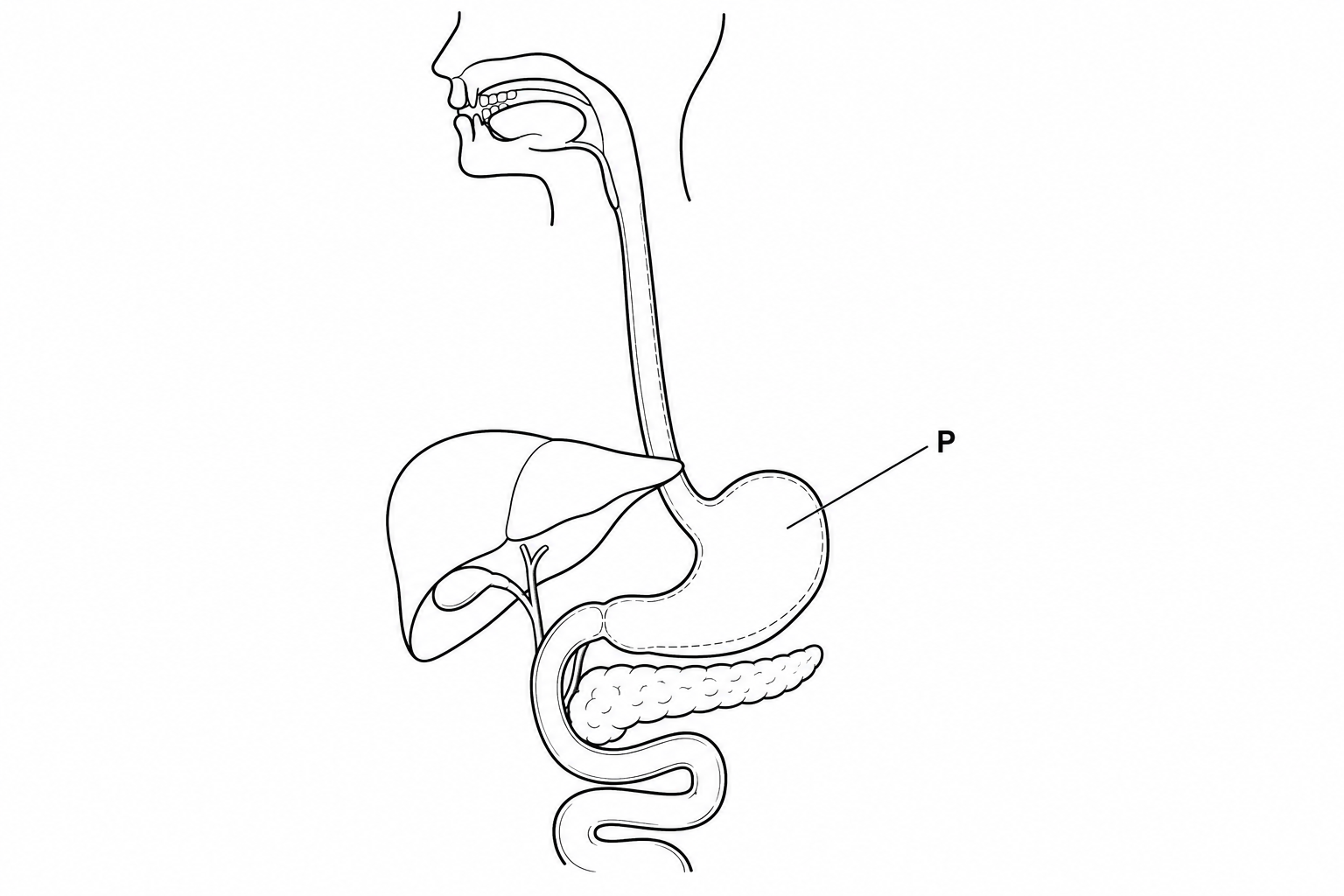
Diagram for question 8: The diagram shows part of the digestive system. Which statement correctly describes the function of the…
  1. A) It stores faeces before egestion.
  2. B) It produces bile and assimilates absorbed glucose.
  3. C) It churns food and begins the digestion of protein.
  4. D) It absorbs water from undigested material and forms faeces.

Q9.

The diagram shows a structure in the small intestine. Which process is represented by the arrows labelled X?
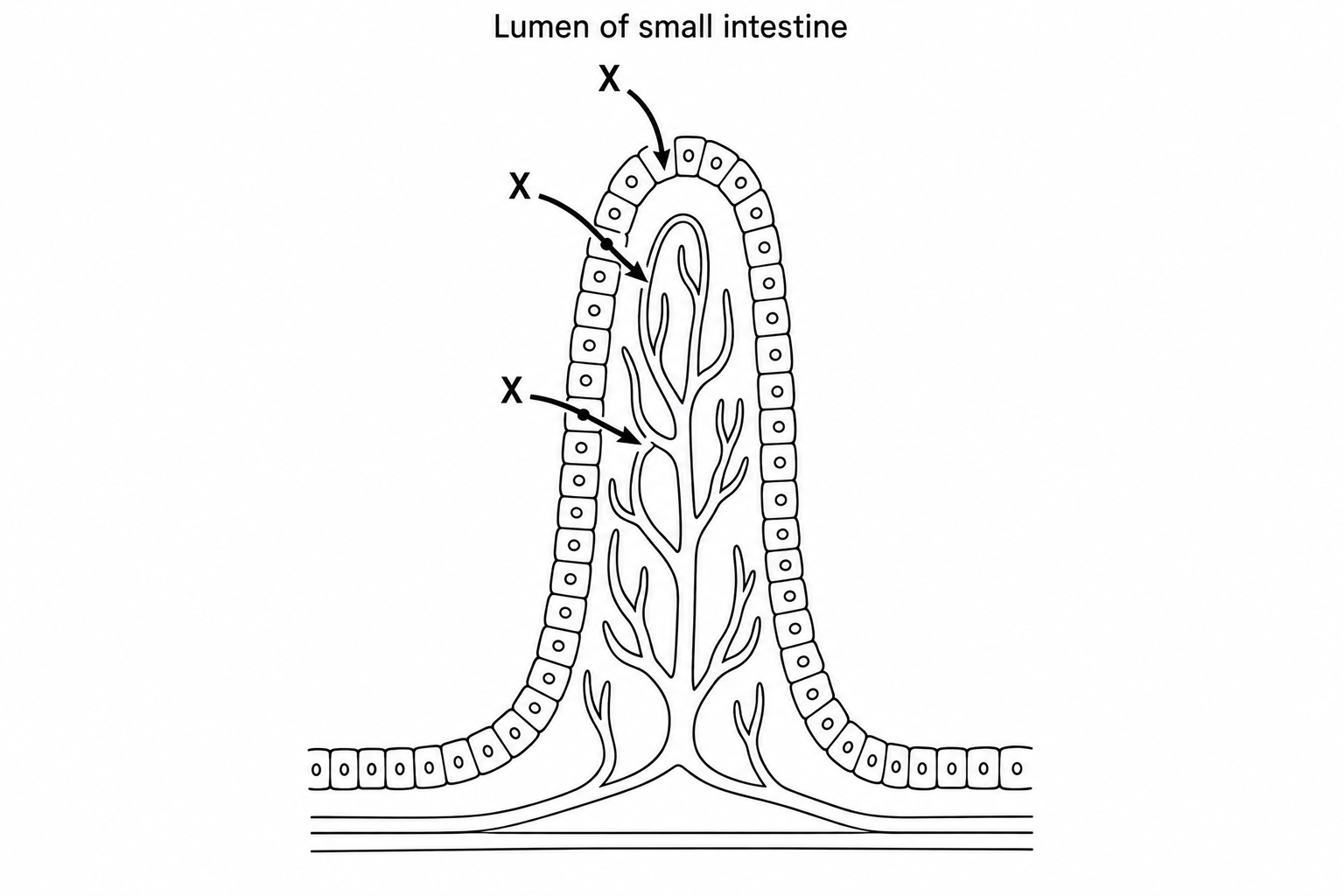
Diagram for question 9: The diagram shows a structure in the small intestine. Which process is represented by the arrows labelled X?
  1. A) Food enters the body through the mouth.
  2. B) Digested nutrients move through the intestinal surface into the blood.
  3. C) Nutrients move from the blood into the intestine to form faeces.
  4. D) Undigested food moves from the rectum out through the anus.

Q10.

The diagram shows digestive organs associated with the small intestine. What is the function of the organ labelled G?
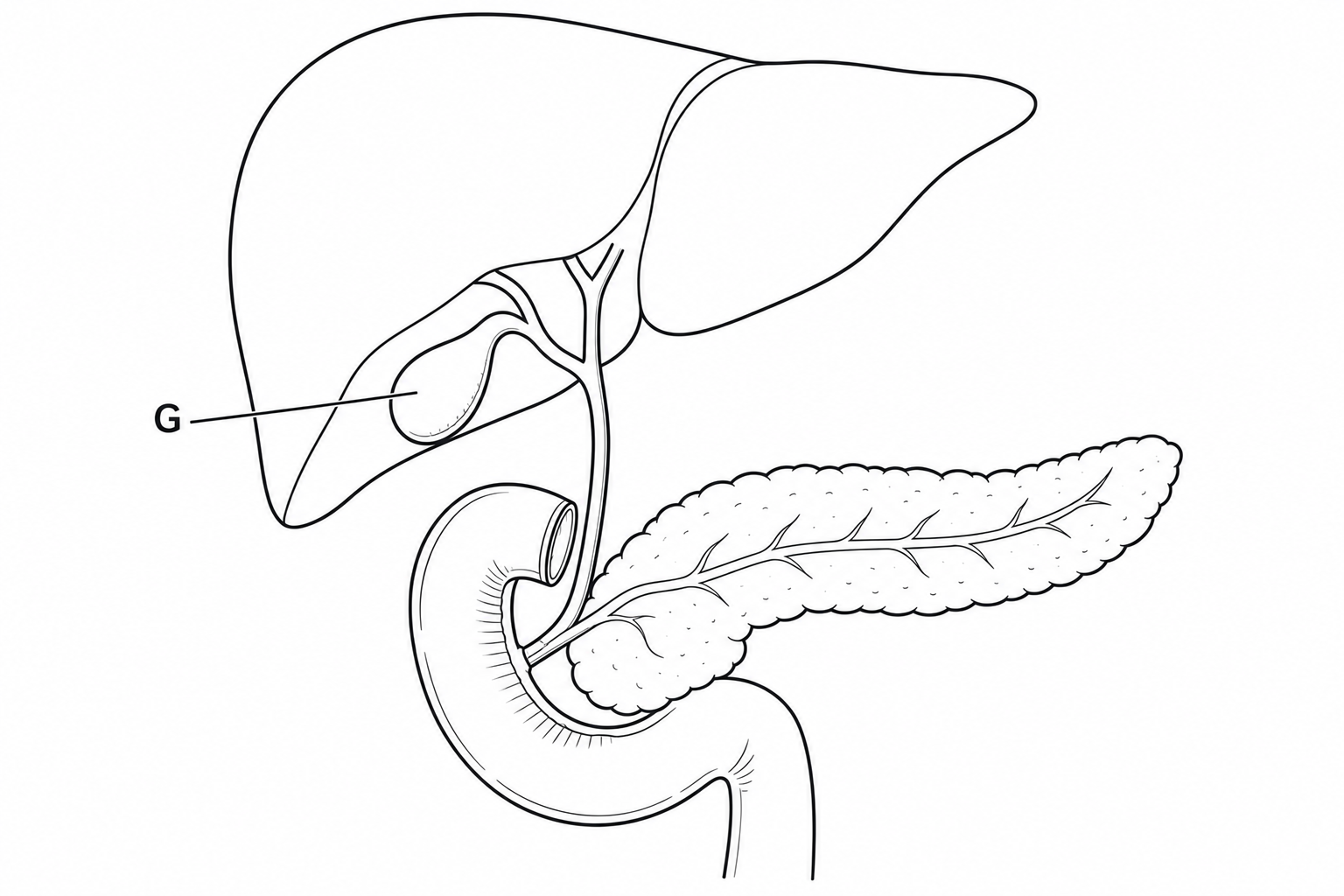
Diagram for question 10: The diagram shows digestive organs associated with the small intestine. What is the function of the organ…
  1. A) It stores bile and releases it into the small intestine to assist fat digestion.
  2. B) It absorbs digested glucose directly into blood capillaries.
  3. C) It produces protease and hydrochloric acid to digest protein.
  4. D) It stores faeces until they are removed through the anus.

What this assessment covers

Concepts tested

  • Ingestion and digestion processes in the mouth
  • Function of the oesophagus in the digestive system
  • Role of the stomach in digestion
  • Importance of the small intestine for nutrient absorption
  • Assimilation of nutrients by the liver

Question Mix

  • Medium questions included

Skills you build

  • Identify functions of digestive organs
  • Understand the sequence of digestive processes
  • Interpret diagrams of the digestive system
  • Explain the role of enzymes in digestion
  • Describe nutrient absorption and assimilation