

PHYSICS - REFLECTION AND REFRACTION
Reflection Worksheet
- Focuses on the principles of light reflection and angles
- Covers the concept of normal lines in reflection
- Includes practical angle measurement scenarios
- Designed for Grade 9 Physics students
Here are the first 3 questions. Click “View all questions” to see the complete assessment.
Q1.
Q2.
Between which two lines is the angle of incidence measured?
Q3.
An incident ray makes an angle of 28^(°) with a plane mirror. What is its angle of incidence?
Q4.
At a plane mirror, the angle between an incident ray and the normal is 41^(°). Which statement correctly describes the angles?
Q5.
A reflected ray forms an angle of 52^(°) with the normal. What is the name of this measured angle?
Q6.
The smaller angle between an incident ray and its reflected ray is 96^(°). The normal divides this angle into two equal parts. What is the angle of incidence?
Q7.
A light ray travels towards a plane mirror exactly along the normal. Which statement is correct?
Q8.
In the figure, what does the marked angle x represent?
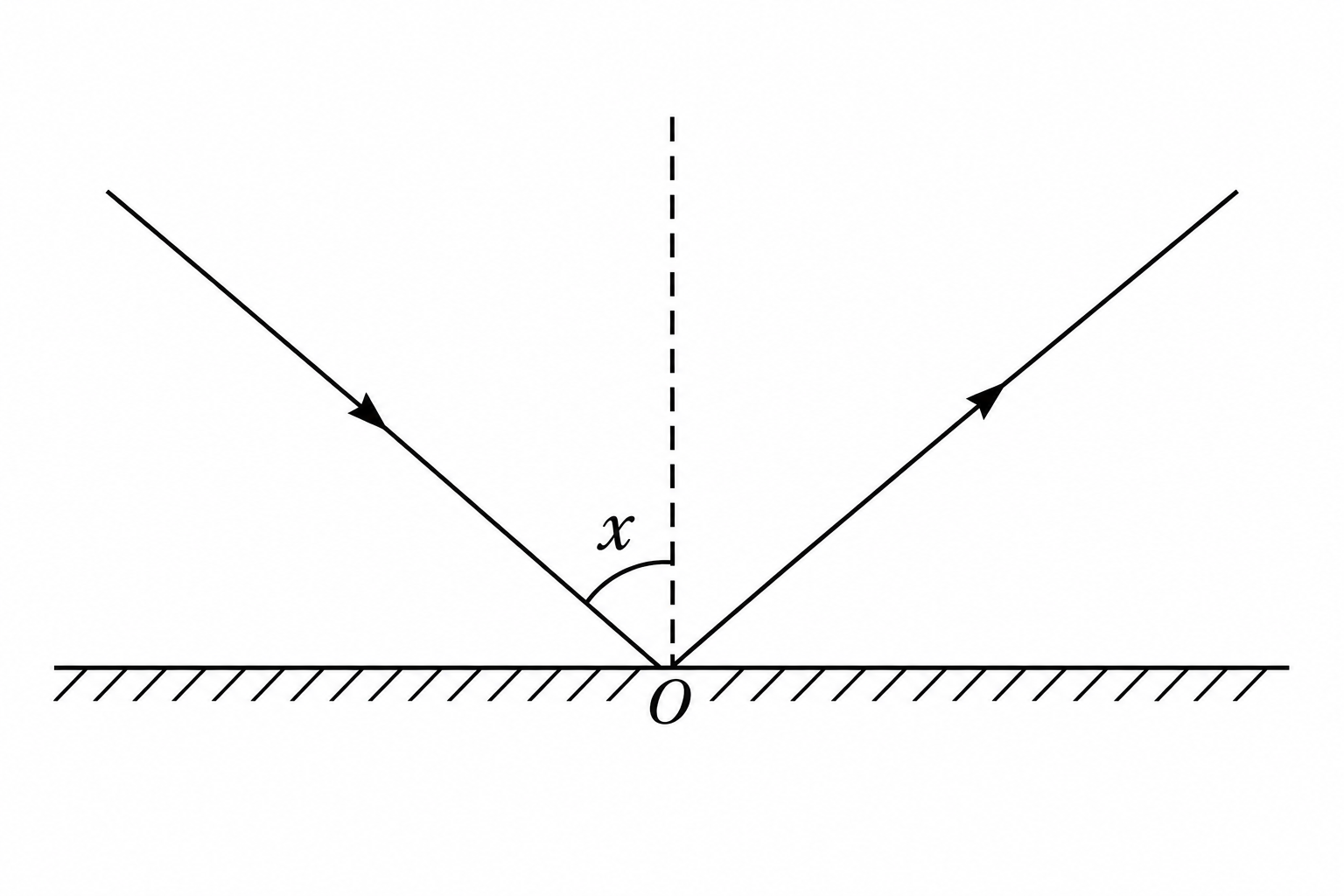
Q9.
The figure shows an angle of 35^(°) between the reflected ray and the mirror. What is the angle of reflection?
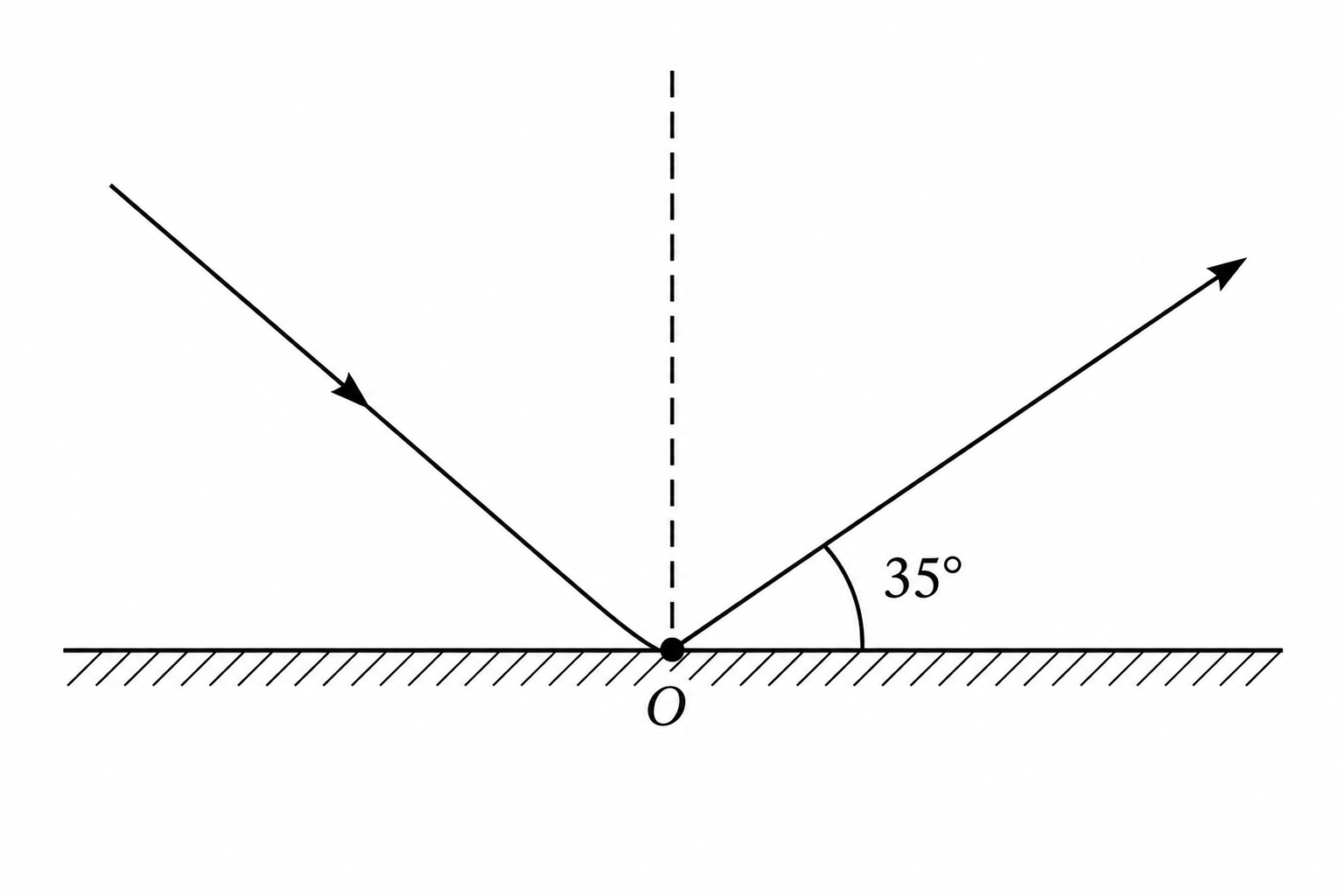
Q10.
Which labelled construction line in the figure is the normal to the mirror at point O?
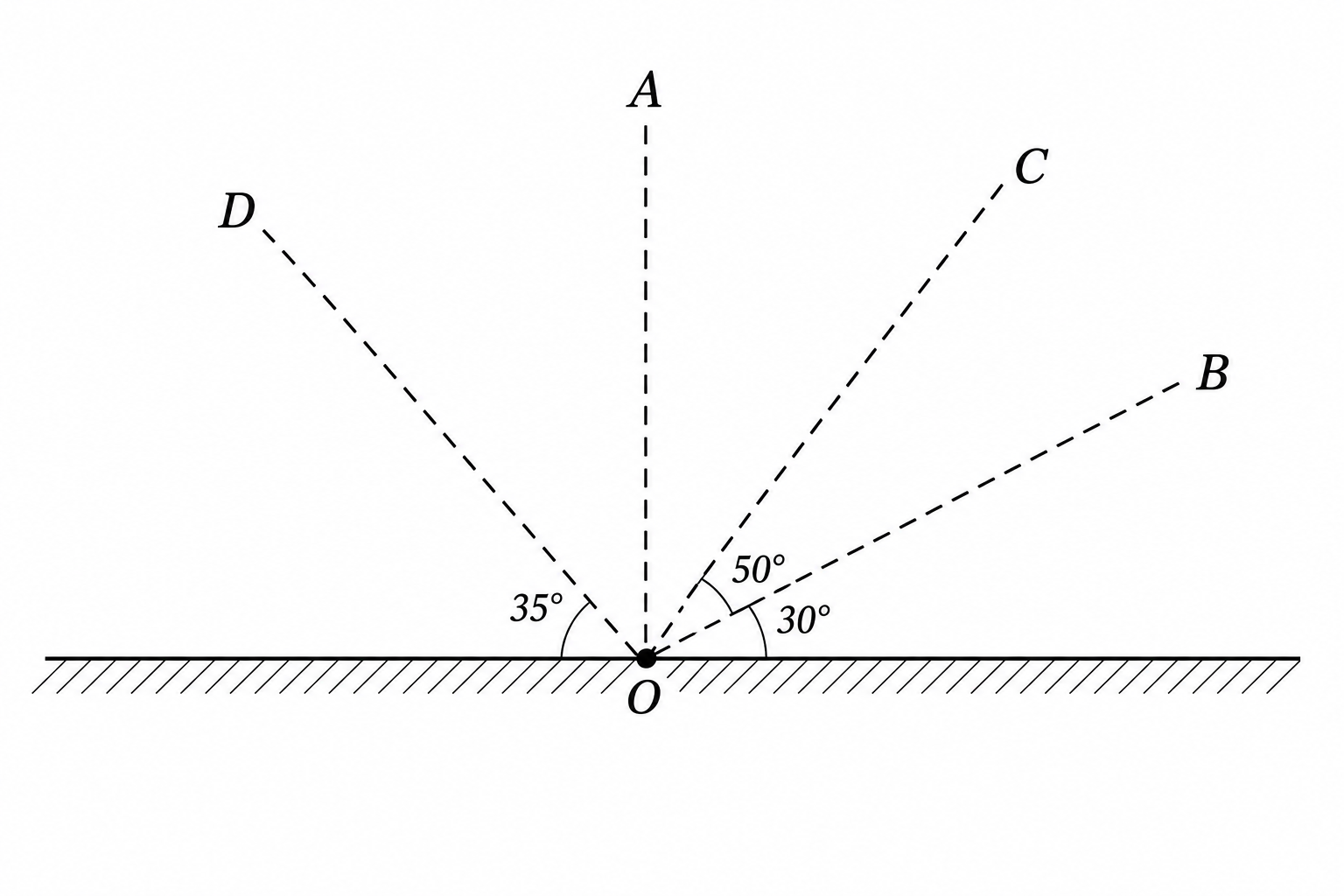
What this assessment covers
Concepts tested
- Definition and role of the normal in reflection
- Measurement of angles of incidence and reflection
- Understanding of incident and reflected rays
- Concept of angles formed with plane mirrors
- Identification of construction lines in diagrams
Question Mix
- Medium questions included
Skills you build
- Identify and define the normal line in reflection scenarios
- Measure and calculate angles of incidence and reflection
- Interpret and analyze diagrams involving light rays
- Apply the laws of reflection to solve problems
- Recognize and label components in optical diagrams
Related assessments
More practice
Other assessments in this subject
