

EARTH & ENVIRONMENTAL SCIENCE - EARTH'S LAYERS
6Th Grade Layers Of The Earth Worksheet
- Explores the composition and structure of tectonic plates
- Examines the movement and interaction of Earth's layers
- Analyzes the relationship between mantle flow and plate tectonics
- Designed for 6th grade Earth Science students
Here are the first 3 questions. Click “View all questions” to see the complete assessment.
Q1.
Q2.
Why can Earth's solid outer layer move even though it is rigid?
Q3.
A student says, "Tectonic plates are made only of crust." Which response best corrects this statement?
Q4.
Which sequence best represents how mantle flow can cause plate movement?
Q5.
Two measuring stations on different tectonic plates move a small distance relative to each other each year. Which explanation agrees with the plate tectonics model?
Q6.
Which comparison of a tectonic plate and the mantle material below it is most accurate?
Q7.
Scientists describe tectonic plates as parts of one outer layer rather than as separate pieces of crust alone. What evidence from Earth's structure supports this description?
Q8.
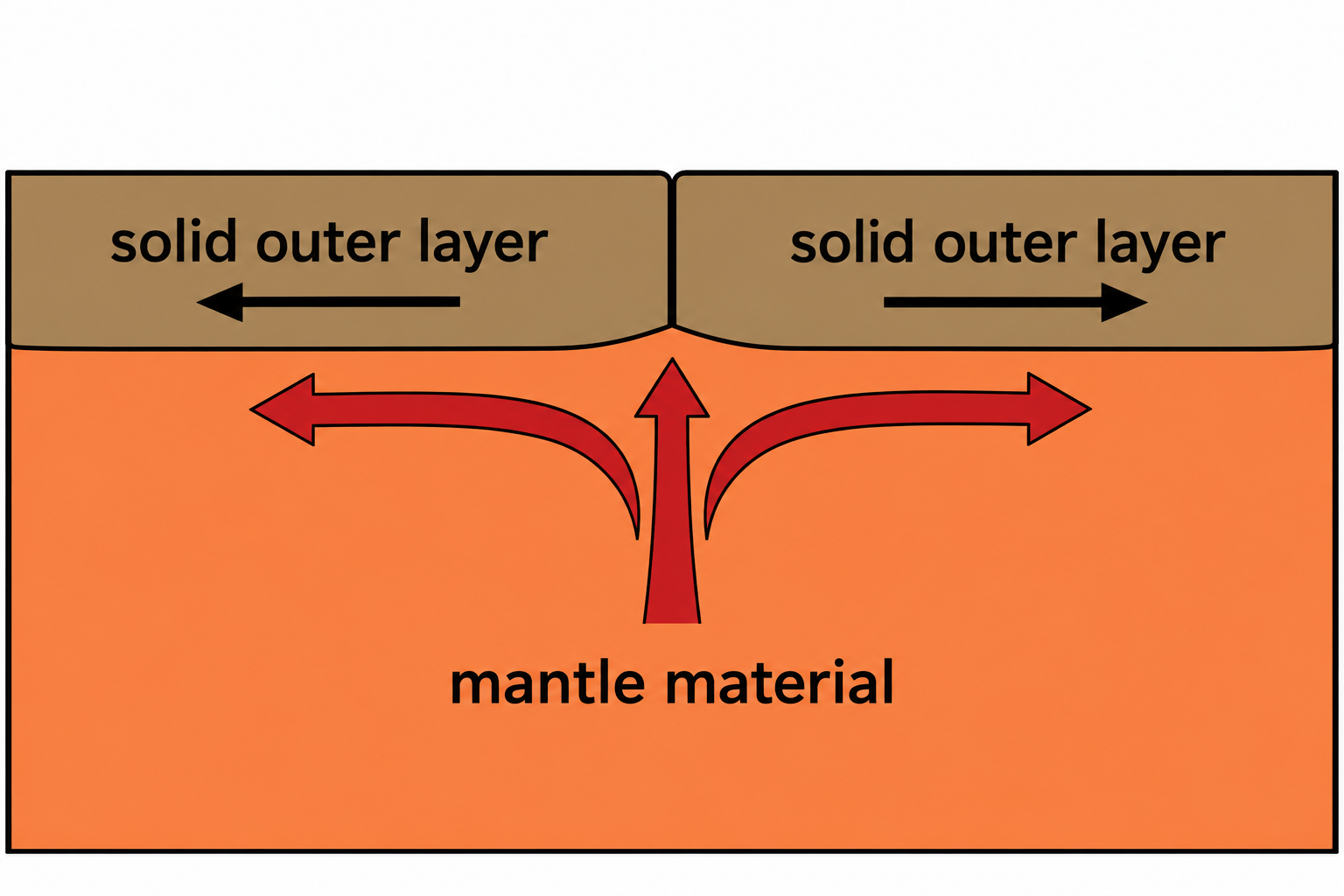
The diagram shows two sections of Earth's solid outer layer above moving mantle material. Which explanation best accounts for the directions in which the two sections are moving?
Q9.
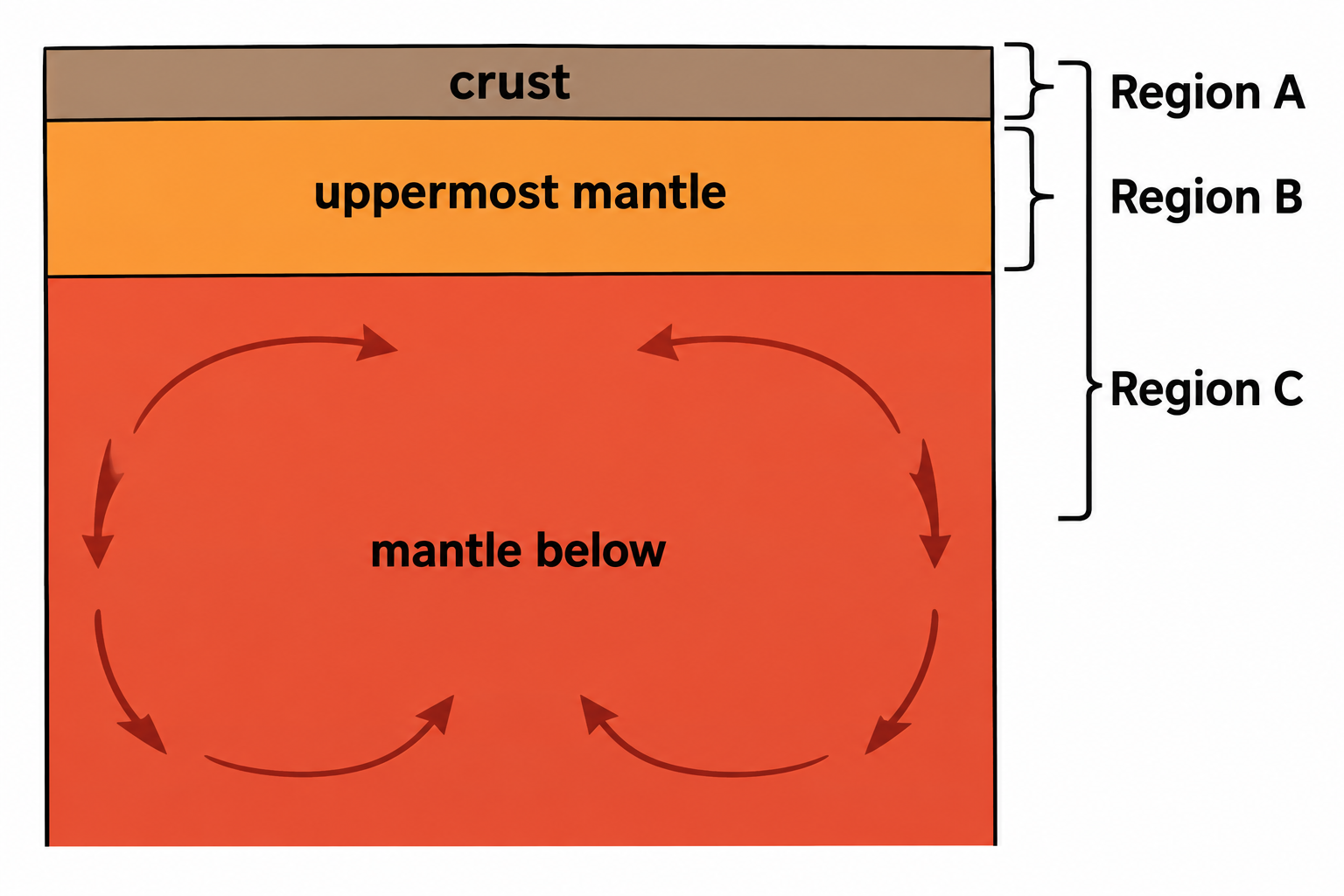
In the Earth cross-section, which labelled region represents a complete tectonic plate?
Q10.
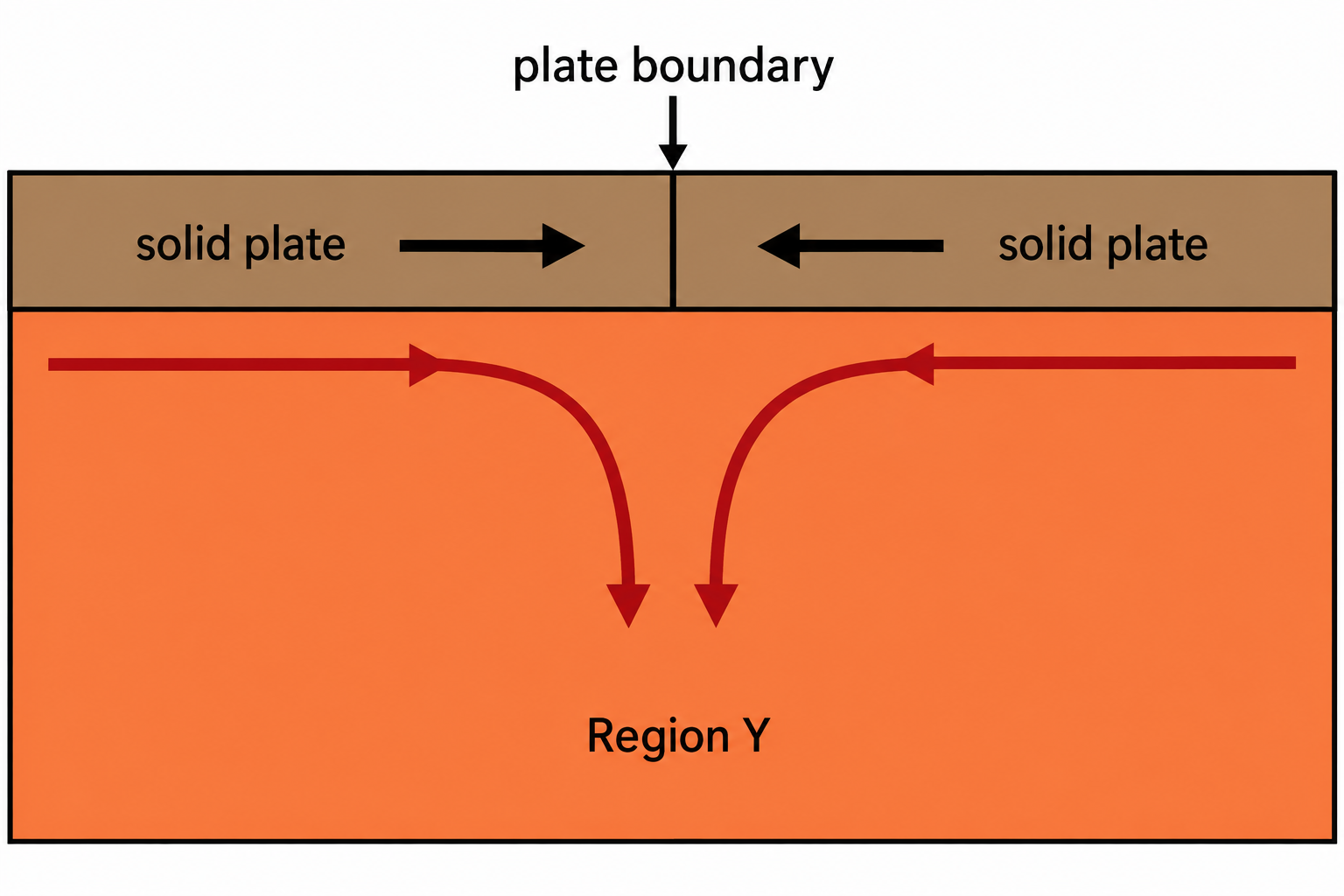
The diagram shows mantle flow beneath a boundary between two plates. Which statement best links the movement in region Y to the movement of the plates?
What this assessment covers
Concepts tested
- Tectonic plate composition
- Movement of Earth's outer layer
- Mantle flow and plate movement
- Plate tectonics model
- Earth's structural layers
Question Mix
- Medium questions included
Skills you build
- Identify components of tectonic plates
- Explain plate movement mechanisms
- Correct misconceptions about Earth's layers
- Interpret diagrams of Earth's structure
- Analyze scientific explanations of plate tectonics